
Natural Disasters in India Notes with PDF
These notes are your ultimate revision weapon to revise Natural Disasters in India . We’ve distilled years of previous exam questions (PYQs) into one powerful, concise resource. Everything you need to know, nothing you don’t.
- PYQs, Decoded: All key concepts from past exams, organized and simplified.
- Revise in Record Time: Short, precise, and designed for last-minute review.
- Focus on What Matters: Master high-probability topics and boost your confidence.
- Free PDF to download.
You'll Read
Tsunamis
- 2004 Indian Ocean Tsunami
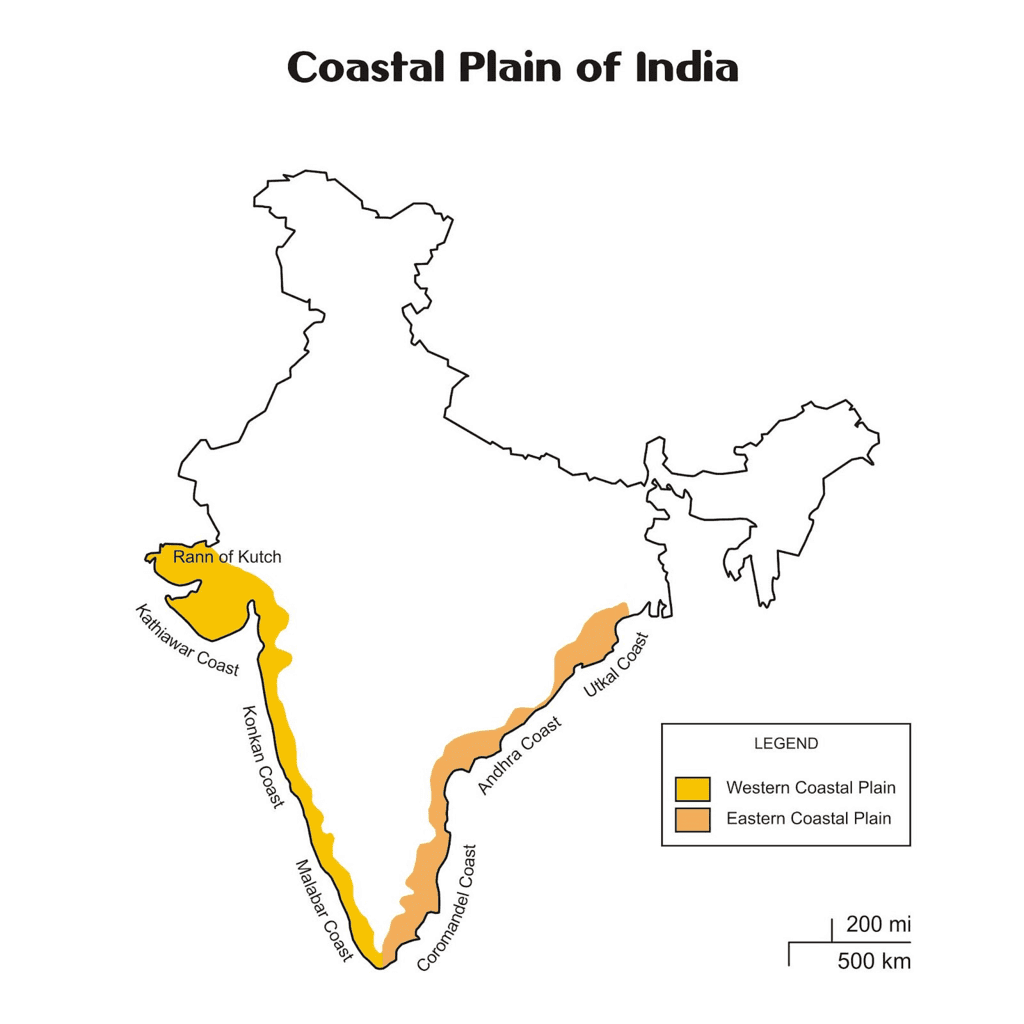
- The Coromandel Coast was the worst-affected coast of India.
- The Coromandel Coast is located in southeastern India, stretching from False Divi Point (Andhra Pradesh) in the north to Kanyakumari (TN) in the south.
- Tsunami Warning Systems
- The Indian Tsunami Early Warning Centre (ITEWC) is located in Hyderabad.
- It was established in July 2005 at the Indian National Centre for Ocean Information Services (INCOIS).
- INCOIS operates under the Earth System Science Organization (ESSO).
Cyclones
- Cyclone Prone Areas & Causes
- The east coast of India is more prone to cyclones than the west coast.
- Cyclones are more frequent in the Bay of Bengal due to:
- High sea surface temperatures.
- Conical shape of the Bay of Bengal, which helps funnel cyclones northwards.
- Cyclone seasons in India are typically May-June and mid-September to mid-December.
- Tropical cyclones also occur during the monsoon season and October-November.
- A key factor for tropical cyclones in May is local temperature variation.
Earthquakes & Seismic Zones
- Seismic Zoning of India
-
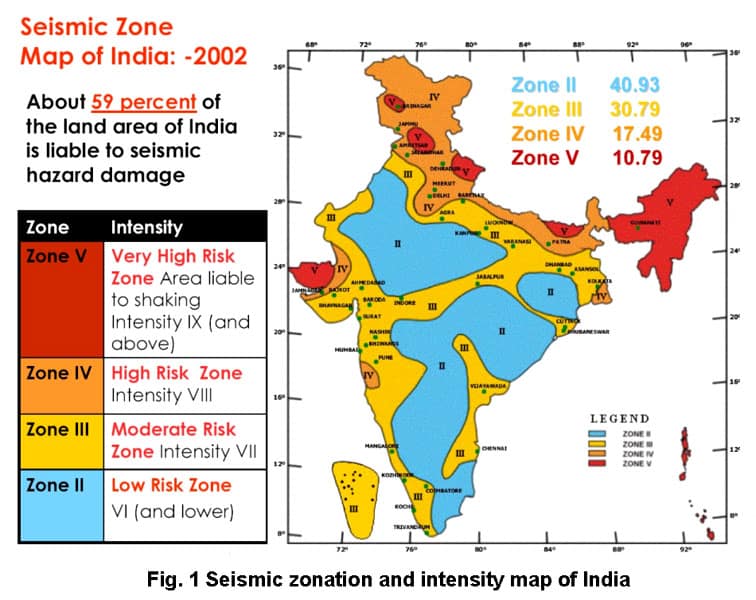
- India is divided into four seismic risk zones (Zone II, III, IV, and V) by the Bureau of Indian Standards (BIS).
- Zone V has the highest seismic risk.
- Zone II has the lowest seismic risk. (Zone I was merged with Zone II in 2002)
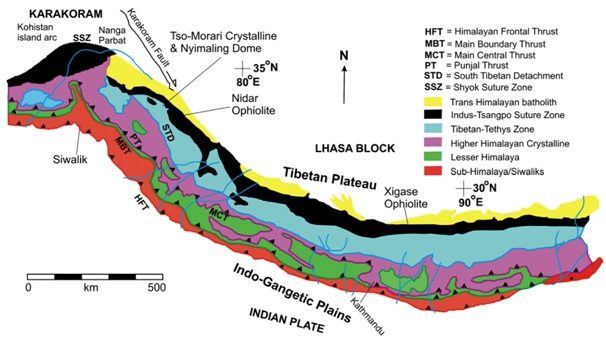
- The Himalayan region has the highest concentration of seismic zones due to longitudinal thrust zones and the collision of the Indian and Eurasian tectonic plates.
- Specific Seismic Areas
- The Koyna region (Maharashtra) is earthquake-prone due to Reservoir-Induced Seismicity (the Koyna Dam is located on Donichawadi fault plane).
Note: Karnataka Plateau is not in a high seismic intensity zone.
- Cities and their Seismic Zones:
- Zone V (Very High Risk): Bhuj, Srinagar
- Zone II (Low Risk): Hyderabad, Chennai
Floods & Droughts
- Flood-Prone Regions
-
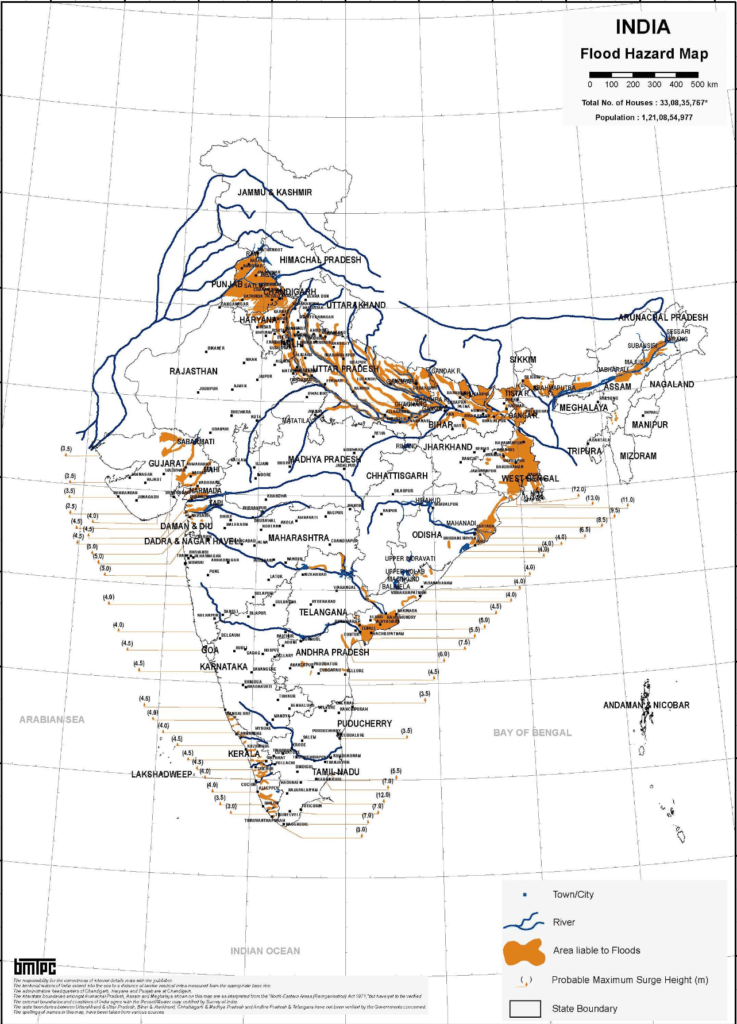
- The plains of Uttar Pradesh and Bihar are highly susceptible to floods.
- The frequency of floods in the North Indian plains has increased due to a reduction in river valley depth from silt deposition.
- Uttar Pradesh Specific: The Eastern area is the maximum flood-affected region. Nearly half of the total flood-affected areas in the state fall within the high flood zone.
- Assam, West Bengal, Andhra Pradesh, Punjab, Haryana, and Gujarat along with north eastern states are prone to floods.
- Sometimes Tamil Nadu experiences flooding during November to January due to the retreating monsoon.
- Drought-Prone Regions
- Mid-Eastern India (e.g., Jharkhand, Northern Odisha)
- West & Central India
Landslides
- The frequency of landslides has increased in the Himalayas.
Disaster Management Infrastructure
- Meteorological Department
- The Indian Meteorological Department (IMD) was established in 1875.
- Its headquarters are on Lodhi Road, New Delhi.
- It functions under the Ministry of Earth Sciences.
- Training & Forecasting
- The Flood Forecast & Warning Organization was set up in 1969 under the Central Water Commission.
- The first Disaster Management Training Institute in India was established in Latur, Maharashtra.
State-wise Disaster Vulnerability
- Odisha faces the maximum number of natural disasters, being prone to cyclones, floods, and droughts.
- Bihar is the most flood-prone state.
Climatology
- Monsoons & Rainfall Patterns
-
- Western Disturbances are the cause of rainfall during winter in the north-western part of India.
- They originate in the Mediterranean region.
-
Know More About Natural Disasters in India: